

Where do we need glyphosate?
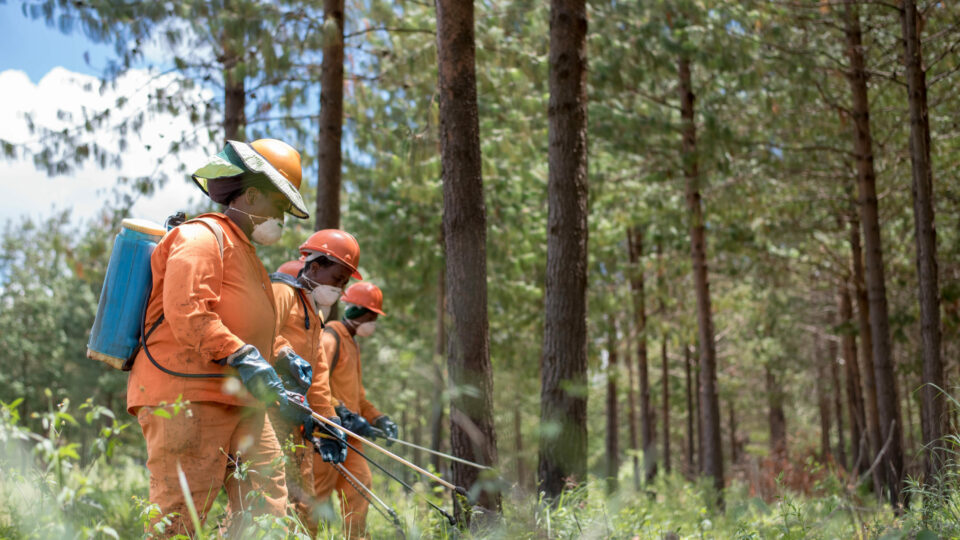
The Timber Industry Pesticide Working Group (TIPWG) has issued a guidance note clarifying the use of glyphosate for firebreak preparation.
Jacqui Meyer, TIPWG’s Coordinator, says there has not been a new or blanket approval of glyphosate for firebreak preparation. Instead, glyphosate should be regarded as a risk-informed, constrained option to be used only where justified.
“It is important to emphasise that glyphosate is not the only registered herbicide but has emerged as the most appropriate option under current conditions, based on comparative risk, not preference”, she says.
The current position reflects:
- existing registrations under Act 36 of 1947, where certain glyphosate products include vegetation management uses that may extend to firebreak preparation, where explicitly stated on the label, and
- a risk-based evaluation of available registered herbicides, which has identified glyphosate as the least harmful option within the current set of legally registered products for this specific use case.
TIPWG’s guidance note provides key considerations for the forestry industry.
1. Compliance remains non-negotiable
Use outside of label instructions remains illegal under Act 36. Glyphosate may only be used:
- where the specific product label permits the use, and
- strictly in accordance with label instructions (rates, application method, buffers, etc.).
2. Glyphosate is not a default solution
The identification of glyphosate as the least harmful option does not mean that chemical control should replace current manual or mechanical firebreak preparation methods. Where effective firebreak preparation systems are already in place, there is no technical or compliance-based reason to switch to glyphosate use.
The current stance should be seen as enabling a compliant option where no viable alternative exists, not advocating a shift towards chemical control”.
3. Firebreaks represent a high-exposure environment
Firebreaks are usually:
- located on slopes or areas prone to runoff,
- in proximity to watercourses, and
- accessible to workers and, in some cases, the public.
As a result, product selection must consider exposure risk, not only hazard classification.
4. Glyphosate is not a direct replacement for paraquat or glufosinate-ammonium
It is important to recognise that glyphosate differs fundamentally from both paraquat and glufosinate-ammonium in terms of behaviour and risk profile. Glyphosate should not be treated as a like-for-like substitute for either paraquat or glufosinate-ammonium. Its use should be carefully considered in relation to site conditions and firebreak objectives because:
- Glyphosate is systemic, resulting in complete plant kill, whereas paraquat and glufosinate-ammonium act primarily as contact herbicides (with glufosinate having limited translocation).
- The systemic action of glyphosate may lead to increased bare soil exposure, particularly in firebreak strips.
- In certain conditions, this can contribute to erosion and runoff risk, especially on slopes or in areas with higher rainfall.
5. Use must be targeted and justified
Avoid using the chemical routinely without a clear justification. Where glyphosate is used, it should be:
- site-specific,
- risk-assessed, and
- applied in a targeted manner, for example, for tracer lines rather than blanket application, where appropriate.
6. Integrated firebreak management remains best practice
Firebreak preparation should continue to follow an integrated management approach, with manual and mechanical methods as the primary tools and chemical use supplementary, applied only where necessary.
7. Status of alternative products
Contact, non-residual herbicides like pelargonic acid-based products are a more suitable option for firebreak preparation; however:
- they are not yet registered for this use in South Africa, and
- cannot currently be relied upon operationally.
Similarly, the status of other products, such as glufosinate-ammonium, remains uncertain and subject to regulatory approval.
The key question
Meyer says, the key question is “Where do we need glyphosate?” It is not “Where can we use glyphosate?”
TIPWG is part of Forestry South Africa (FSA) and promotes responsible and effective use of pesticides in South African commercial timber plantations. It supports the industry by clarifying legal and certification requirements and promoting risk-based, context-appropriate decision-making.
Source: Jacqui Meyer and https://www.tipwg.co.za/