




Precision transport to maximise efficiency
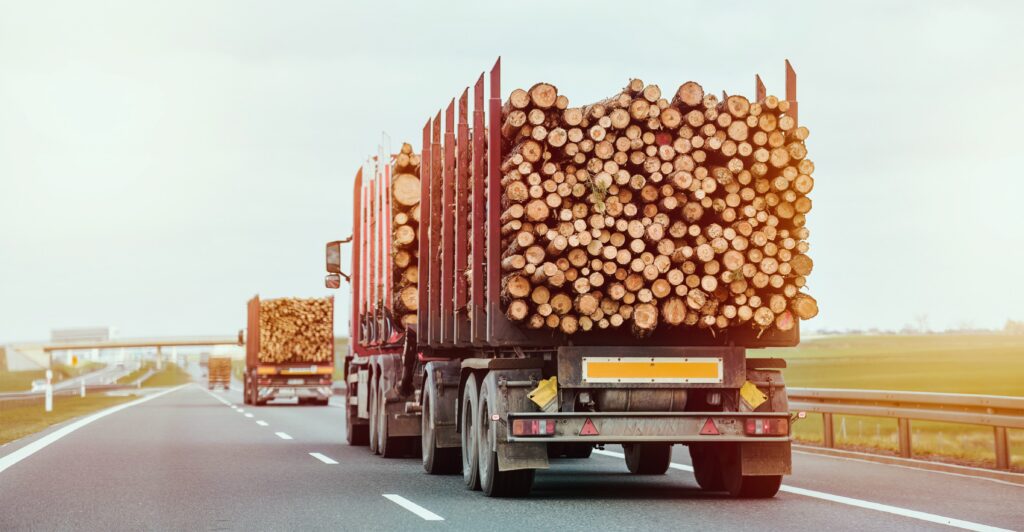
South Africa's forestry industry runs on efficiency, and every load that moves from plantation to mill must cross difficult terrain to get there. Harvesting methods keep improving, but transport remains one of the sector's biggest levers for profitability, safety and sustainability, and one of the hardest to get right without accurate data at the point of loading.
In 1987, the South African company Loadtech began manufacturing loadcells and designed and supplied the first onboard weighing systems in the local timber industry in 1989.
Today, most professional forestry operators and several dedicated smaller business owners have fitted weighing systems to their trucks to prevent over- and underloading.
All trucks and trailers are manufactured to carry a specific maximum load. An onboard weighing system is an essential tool for log and timber transporters because it lets the driver monitor and control the weight and its distribution during the loading process. This ensures that the truck carries a full legal load within its operating limits on each trip.
Unique transport challenges
Unlike most bulk commodities, timber doesn't behave consistently. Species, age, moisture content, humidity and growing conditions all shift the final weight of a load, which means a truck that looks identical to another can be several tonnes over the legal limit.
That variability is why Loadtech builds its systems specifically for industries where payload accuracy makes or breaks productivity. Across rigid trucks, articulated combinations and PBS timber vehicles, the system gives operators real-time weight information before they're anywhere near a public road.
Mobile weighbridge
Most forestry loading happens well out of reach of a weighbridge. Once a truck has left the loading zone, fixing an overloaded vehicle becomes expensive, slow and often impractical.
Loadtech's answer is to display gross vehicle weight, axle group weights, and live payload information to the operator during loading, so the maximum legal payload is achieved on the first attempt. Drivers leave already knowing they're within the legal weight limit, rather than hoping so.
The onboard weighing system employs weighbridge-type load cells mounted on the truck between the chassis and the load body, effectively turning the vehicle into a mobile weighbridge.

Savings
Transport is one of forestry's highest operating costs, and every avoidable trip adds to the bill in diesel, labour, maintenance and tyre wear.
By helping fleets carry the maximum legal payload on every journey rather than running under capacity, Loadtech's technology reduces the number of trips a fleet needs to move the same volume of timber. Across a fleet making hundreds of movements a month, that adds up to real reductions in operating costs.
The same efficiency case extends directly to sustainability. Fleets that maximise legal payload need fewer vehicle movements to shift the same volume of timber, resulting in lower fuel consumption and reduced emissions without sacrificing productivity.
Safety and sustainability
Overloading isn't only a compliance issue. Incorrect axle loading affects braking, steering, suspension life and overall stability, and this matters more on steep forestry roads and gravel haul routes than almost anywhere else a truck operates.
By continuously monitoring axle group weights, Loadtech's system enables drivers to balance a load correctly before departure, reducing mechanical stress on the vehicle and improving safety for drivers and other road users. Getting weight distribution right has moved beyond avoiding fines to become standard responsible fleet management.
Onboard weighing isn't only a timber short- and long-haul truck transport tool. Loadtech can also fit the technology to forwarders, giving operators the real-time payload information to maximise every cycle and cut unnecessary machine movements.
Loadtech designs its onboard weighing systems to operate in the dust, mud, steep gradients, vibration and unpredictable weather that are standard operating environments for forestry equipment.
Driving the future
Fleet managers increasingly require real-time operational information to improve decision-making, reduce costs and maintain compliance. Accurate onboard weighing is becoming one of the most valuable data sources available to transport businesses.
For Loadtech, onboard weighing is about far more than measuring tonnes. It is about helping customers operate safer fleets, improve profitability, reduce environmental impact and maximise every journey.