





Heed the fire risk warnings: Plan, prepare and Act now to survive

By Joy Crane
Forestry fire specialist Tiaan Pool is calling for stronger prevention, preparation, applied research and specialist skills, as Southern Africa's climate and changing fire environment make extreme wildfires inevitable and harder to manage.
Pool is Head of the Forestry Department at Nelson Mandela University (NMU) George Campus. He has over 25 years' experience in teaching, community engagement and applied research, and his expertise includes fire investigation, integrated fire management and developing fire management plans.
He says human activity, including arson, escaped planned burns and unattended cooking or warming fires, is the main ignition source of runaway wildfires.
Two seasons
Two distinct fire seasons affect South Africa's forestry sector. Limpopo, Mpumalanga and KwaZulu-Natal receive summer rain, so their fire risk peaks in the dry winter months. The Western Cape, including its Garden Route, and most of the Eastern Cape fall within the winter rainfall region, where the dry summer brings the risk.
Apart from commercial forestry, many of these areas are home to indigenous forests, flora and fauna. In the Western Cape, fire plays an ecological role in the Cape Fynbos and Renosterveld biomes, which depend on periodic fire to maintain natural processes and to thrive.
Plan and manage appropriate fires while preventing unwanted fires in the wrong conditions from threatening lives and livelihoods.

Climate and weather
Climate and weather affect fire preparedness in two distinct yet interlocking ways.
- Weather is the immediate, short-term condition that feeds into the Fire Danger Index (FDI), which is calculated from air temperature, relative humidity, wind speed and days since the last rain. It determines whether a prescribed burn can proceed safely.
- Climate is the long-term backdrop that sets the baseline for how much fuel exists, how dry it is and how long the fire season lasts.
Globally, climate change is narrowing the window for preventive fire action while widening the window of risk. A 2022 United Nations Environment Programme report predicted a rise in extreme fires of up to 30% by 2050.
The critical problem for South African timber growers is that climate change is altering the baseline, making traditional weather-based preparedness assumptions unreliable.
El Niño
The South African Weather Service has warned of below-normal rainfall linked to the expected strong El Niño this summer. This does not necessarily mean that every part of the country will experience drought. However, the combination of below-normal rainfall, higher temperatures and dry vegetation creates conditions that make fires more frequent, more intense and more difficult to contain.
Below-average rainfall in the Western Cape's winter rainfall areas in 2025 and 2026 has already created conditions for a difficult fire season. By January 2026, more than 90,000 hectares had burned, with fires running simultaneously through the Cederberg, Overstrand, Overberg, Franschhoek and Mossel Bay. Several foresters I have spoken to are commenting on the growing fuel load in the Garden Route where alien invasive clearing is not keeping up with controlled burns.
The picture is different in the summer rainfall provinces. Above-normal winter rainfall this year in Limpopo, Mpumalanga and KwaZulu-Natal is anomalous and will promote alien vegetation growth and the accumulation of understorey and grass fuels. Most private commercial growers are taking action; however, the threat of runaway veldfires remains on unmanaged community and public land, particularly along the Garden Route.

Fire triangle
In wildfire response management, the fire environment triangle describes the conditions and forces that determine fire behaviour: fuel, weather and topography, all shaped by the prevailing climate.
“The number of fires does not tell us enough about the danger,” Pool says. “We also need to understand how large they become, how intensely they burn and how difficult they are to control. A changing fire environment demands a changing management response”.
Fuel
Pool says fuel is the only component we can manage. Its type (grass, shrub, plantation forest), load (how much), arrangement (continuous or fragmented) and moisture content directly determine whether a fire can ignite, how intensely it will burn and how difficult it will be to control.
He identifies invasive alien vegetation as a significant management concern. Woody species, including acacias, pines, eucalyptus and hakea, can accumulate substantial biomass, increasing the fuel available to burn. Research into the 2017 Knysna mega fire found that these species contributed to increased fire severity.
Changing land use adds further complexity. Forestry plantations and agricultural crops present different fuel conditions, while settlements near combustible vegetation place people and property within reach of a spreading fire.
For vulnerable households, small businesses and public institutions, losses can exceed their capacity to recover. The destruction of grazing, crops, timber and infrastructure also affects employment and the economies that depend on them. Managing these risks requires coordination across property boundaries and sectors.
Weather
Weather is the most variable and uncontrollable factor. High temperatures, low humidity and berg winds drastically increase fuel dryness and the speed of fire spread.
Berg winds pose a particular risk to fire preparedness. A berg wind is a hot, dry downslope wind that occurs in winter when high pressure sits over the interior, and low pressure sits off the coast. The pressure difference pushes air down the escarpment, bringing warm, dry air to coastal areas.
Research by Sheldon Strydom and Michael Savage (2024) on berg winds in KwaZulu-Natal shows that daytime berg wind events significantly change the microclimate and fire danger at all elevations, but the existing FDI does not fully account for these changes.
Because wind is unpredictable, a grower relying on the standard FDI can be caught by a berg wind event that the index has not adequately captured. This endangers firefighters on fire lines and increases the risk of casualties and resource loss.
Topography
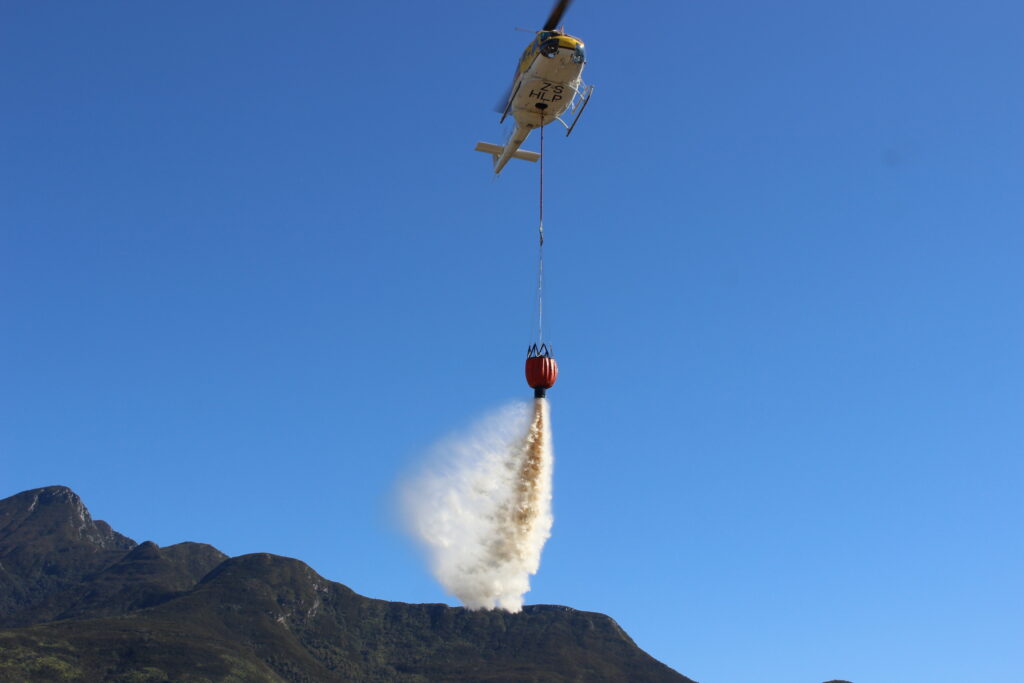
When planning firefighting operations in South Africa, the three most critical aspects of topography to consider are slope, aspect and terrain features such as ridges and valleys.
Slope steepness directly affects fire spread speed because fires travel significantly faster uphill. The flames pre-heat and dry the unburned vegetation ahead of them, so it ignites almost instantly.
The direction a slope faces (aspect) alters fuel moisture and temperature. North and west-facing slopes receive the most direct sunlight and solar radiation, so the vegetation is drier, hotter and more volatile, and fires on these slopes burn with higher intensity and are harder to control.
Narrow valleys, ravines and dry riverbeds act as natural chimneys, drawing fire upwards and dramatically accelerating its spread. When a fire reaches the top of a ridge, it often slows temporarily as it meets backing winds or reaches the crest. Saddles, the low points between peaks, can channel wind and fire rapidly across a mountain range.
Mountainous terrain also creates its own microclimates, such as upslope thermal winds during the day and downslope winds at night, which can suddenly reverse fire direction.
Be prepared
When dry, continuous fuel, high temperatures, strong winds, and terrain features align with the prevailing wind direction, fire behaviour can far exceed what even experienced fire bosses and incident commanders expect.
Pool argues that fuel reduction and ignition prevention alone cannot prevent large-scale uncontrolled wildfires. Fire seasons are starting earlier and lasting longer, so the window for safe prescribed burning and mechanical fuel reduction is narrowing. Preparing for inevitable wildfires is more effective than trying to control fire regimes.
South Africa's National Veld and Forest Fire Act provides a framework for fire management, setting out the roles and responsibilities of relevant government departments, organisations such as the Fire Protection Associations and Working on Fire, and landowners. Fire Protection Associations help landowners coordinate prevention, training and shared resources. Working on Fire contributes to prevention, suppression and awareness, while supporting employment and skills development.
Nevertheless, Pool believes resource shortages, uneven implementation, and limited understanding of these responsibilities are weakening preparedness.
Bureaucratic boundaries
South Africa has adopted the Incident Command System to manage large wildfires. During multi-day fires, when several incidents occur simultaneously, cross-municipal and provincial boundaries and urban-rural interfaces, joint planning, coherent public-private coordination and on-scene command are essential.
The system works only if all stakeholders are equally resourced, and multi-agency practical drills are conducted regularly. Leadership and communication systems must be operational, urban fire services must be integrated into wildfire planning where appropriate and coordinating teams must be given the discretion and confidence to make timely decisions.
In January 2026, Trevor Abrahams of Working on Fire told the Mail & Guardian that, “Domestically, responsibilities remain fragmented across spheres of government. Land-use planning often proceeds with limited consideration of fire risk. Invasive vegetation management lacks consistent funding and enforcement, particularly on private land. These gaps are evident whenever suppression efforts are outpaced”.

Act early
Forecasting and satellite technology provide information that can help managers anticipate difficult conditions. However, a seasonal warning only becomes useful when somebody understands its implications and acts.
“An early warning must lead to an early decision”, Pool warns. “Managers need to understand what the forecast means for their land, communities and resources, and then prepare before conditions become dangerous”.
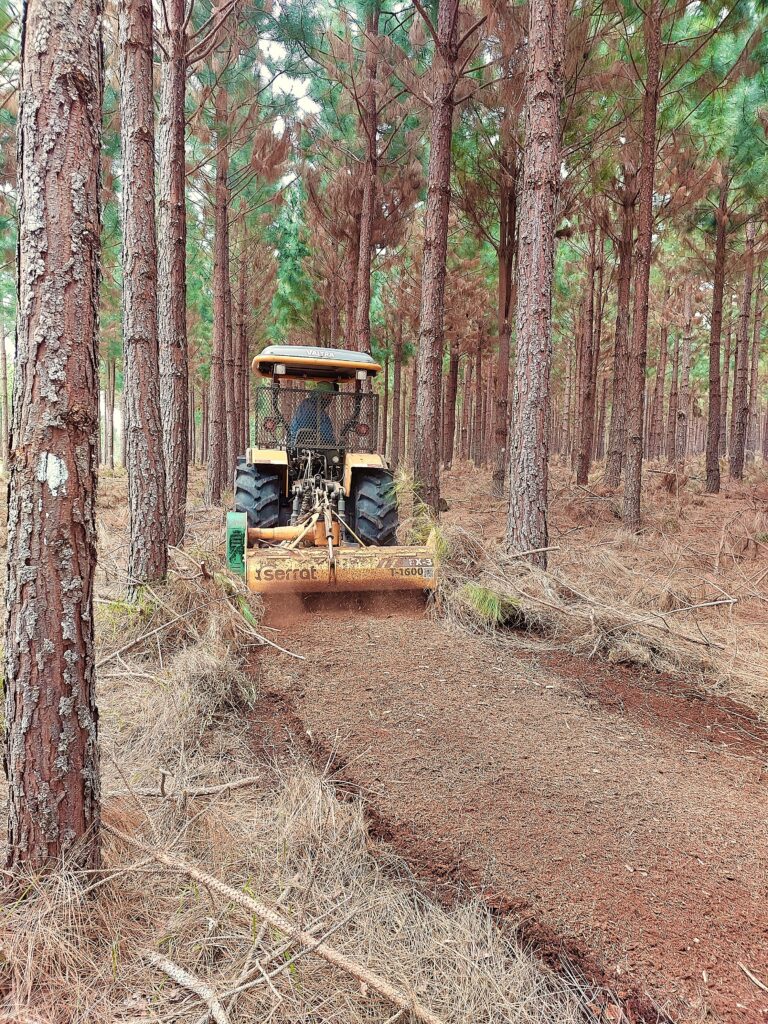
Practical priorities include controlling invasive vegetation, managing hazardous fuel loads, maintaining appropriate protective measures, coordinating response plans, and managing wetlands and riparian areas effectively as part of wider landscape resilience.
Pool says employees and communities need education on wildfires, the FDI and fire preparedness, and that fuel loads and regional and local weather forecasts must be monitored. Fire detection technologies, firebreaks, access and escape routes and firefighting resources must be budgeted, planned, maintained and ready.
Research
Fire management involves changes to biological and physical conditions alongside human behaviour. Research helps explain these interactions and provides managers with a basis for adapting practices.
South African research priorities include protecting settlements near fire-prone vegetation, improving fire-danger warnings, and investigating suppression methods that rely less on scarce water. Understanding how fire regimes may shift across different biomes is also important.
Skills gap
Pool also identifies education as a major gap. He argues that schools need to pay more attention to wildfire awareness and that relevant tertiary programmes should better equip graduates to interpret warnings and manage risk.
“We need more people who can investigate these risks and translate evidence into improved management”, explains Pool. “Remaining agile means continuing to learn as conditions change. The decisions that prevent a disaster need to be made before the fire starts”.


