




CHEP Advances Forest Positive Future with Regenerative Forestry Impact Across Southern Africa
As the world marks International Day of Forests 2026 under the theme “Forests and Economies,” global supply chain solutions leader, CHEP, is reinforcing a clear position: responsible forestry is not separate from economic growth, it underpins it.
With a 100% deforestation-free wood sourcing commitment and a regenerative forestry strategy embedded in its circular business model, CHEP is demonstrating how responsible forestry strengthens supply chains, supports rural livelihoods and builds long-term economic resilience.
Forests are often discussed in environmental terms. Yet they are also critical economic infrastructure: supporting trade, enabling manufacturing, sustaining rural livelihoods and anchoring global supply chains.
In South Africa, commercial forestry spans approximately 1.2 million hectares and produces around 17 million tons of roundwood annually and is a multi-billion-rand contributor to the economy. Though geographically limited, the sector accounts for nearly 10% of the country’s agricultural GDP and close to 5% of manufacturing GDP, with export values nearing R40 billion.
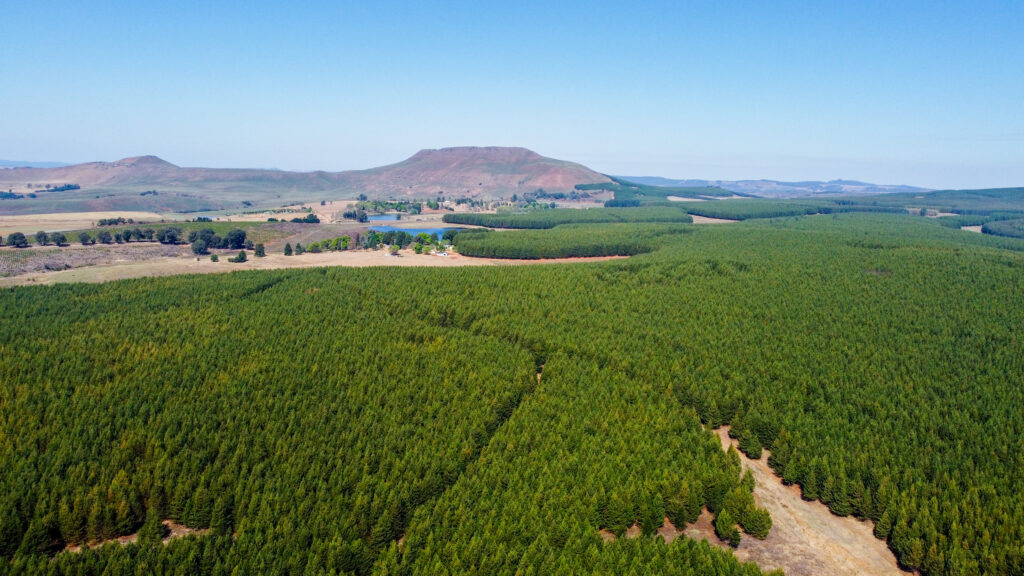
For CHEP Sub-Saharan Africa (SSA), forestry is foundational to its circular pallet pooling model. The company owns and manages 18 forestry farms across South Africa, covering more than 13,500 hectares. Approximately 7,500 hectares are dedicated to pine plantations used in pallet production, while the remaining land includes conservation areas, biodiversity corridors and natural habitats.
Forestry operations for CHEP form part of a global commitment to ensure that 100% of the wood used in its pallets is sourced from certified, responsibly managed forests and verified as deforestation-free.
All CHEP-owned plantations operate under internationally recognised sustainability frameworks and are certified by the Forest Stewardship Council (FSC®) and the Programme for the Endorsement of Forest Certification (PEFC™), ensuring adherence to rigorous environmental, social and governance standards.
In a continent where deforestation continues to threaten indigenous forests, corporate accountability in sourcing practices is critical. By ensuring traceable, certified timber supply, CHEP helps reduce pressure on indigenous forests while supporting a regulated commercial forestry sector that contributes to economic development.

“Forests are not peripheral to the economy, they are foundational to it,” says Marietjie Brown, Sustainability and Government Affairs Lead at CHEP. “As global supply chains face increasing regulatory, climate and resource pressures, responsible forestry becomes a strategic business imperative. Our 100% deforestation-free commitment is non-negotiable and through our circular model, we are proving that protecting forests and strengthening economies can and must happen together.”
While deforestation-free commitments prevent harm, the company’s ambition extends further toward a forest-positive future.
Guided by the principle of enabling the sustainable growth for every two trees used, CHEP operates continuous harvesting and replanting cycles across its forestry estates. This ensures long-term timber availability while maintaining forest productivity and ecosystem health. Building on this foundation, CHEP is raising the bar with a new, ambitious target: by 2030, the company aims to enable the restoration, conservation or sustainable management of two hectares of forest for every one hectare required to meet their timber needs, cumulatively over the five-year period. This commitment underscores CHEP’s proactive approach to regenerative forestry and its contribution to a forest-positive economy.
Beyond commercial plantations, CHEP’s forestry footprint incorporates conservation areas, wetland protection zones and biodiversity management practices. These measures support habitat preservation, soil integrity and water stewardship, all critical components of sustainable economic systems.
Forests also serve as natural climate solutions. Sustainably managed forests act as carbon sinks, absorbing carbon dioxide and storing it in trees and soils, while enhancing resilience against extreme weather events. In this way, forestry becomes more than a raw material input, it becomes a strategic economic asset.
Central to CHEP’s contribution to both forestry and economies is its circular pallet pooling model.
Unlike single-use packaging systems that require continuous extraction of virgin materials, CHEP pallets are designed for reuse, repair and recycling. By keeping wood assets in circulation for longer, the company reduces demand for new timber and lowers carbon emissions across customer supply chains.
Circularity is not only environmentally responsible, it drives operational efficiency and cost stability. Extending asset life cycles reduces material intensity and strengthens supply chain reliability, particularly in volatile global markets.
To support customers in measuring impact, CHEP provides Sustainability Certificates based on independently verified Life Cycle Assessments aligned with ISO 14040 and ISO 14044 standards. These certificates quantify greenhouse gas reductions, waste avoidance and material savings achieved through pooled, reusable solutions.
As regulatory frameworks tighten globally and sustainability reporting requirements increase, businesses are under growing pressure to demonstrate transparent environmental performance.
“Our customers need credible, science-based data to support their ESG reporting and decarbonisation strategies,” says Marietjie. “Our circular model delivers measurable outcomes linking responsible forestry directly to economic value creation.”
By combining certified forestry management, a 100% deforestation-free commitment and a regenerative replanting strategy with a scalable circular business model, CHEP is contributing to:
- Long-term timber security
- Rural employment and skills development
- Biodiversity protection
- Climate resilience
- Stable and efficient supply chains
Forests underpin industries, trade networks and community livelihoods. Protecting and regenerating them is not only an environmental imperative, but also an economic one.
“As businesses navigate rising regulatory expectations and increasing climate risk, resilient natural systems will become even more critical,” concludes Marietjie. “By investing in forest positive practices today, we are helping to build stronger economies for tomorrow.”