



The social and economic value of traditional medicine and trees
By Graeme Wild, CEO of Sappi Southern Africa
After many years in forestry and the bioeconomy, I have come to believe that we sometimes make the relationship between people and trees seem shallower than it is.
We talk about carbon, biodiversity and healthy landscapes, and rightly so. But a tree does not exist in isolation. It depends on soil, water and the people who live around it. In many rural communities, indigenous trees and plants also provide medicine, firewood and income, and they carry cultural knowledge passed down through generations.
Traditional medicine is a powerful example. An estimated 27 million South Africans use it, and the trade supports at least 133,000 income-earning opportunities, many of which are held by rural women.
Around 771 plant species supply the traditional medicine market, estimated at R2.9 billion annually. This is not a peripheral part of South African life.
Overharvesting
Yet, much of the trade has historically relied on wild collection, often through potentially unsustainable harvesting practices. Bark and roots are removed faster than plants can recover, and some plants are taken whole. Supply falls, and prices rise.
Telling someone who earns a living from a plant, or a healer who needs it for their practice, that the species is threatened does not make that need disappear. This is where our experience with Sappi's Rare, Threatened and Endangered Species Programme has been particularly illuminating.

Pepper bark tree
The programme began in 2013 with seed funding from Sappi and a focus on Warburgia salutaris, the pepper-bark tree. Demand for its bark had put considerable pressure on wild populations. We started with 40 trees and a practical question: if people were going to continue using pepper-bark, could we find a way for them to do so without steadily destroying the resource?
That meant understanding how the plant was used, learning to propagate it successfully, and working with traditional healers and communities to develop alternative harvesting practices. Removing bark and roots can damage or kill a plant; however, leaves and stalks may be a more sustainable source of medicinal material.
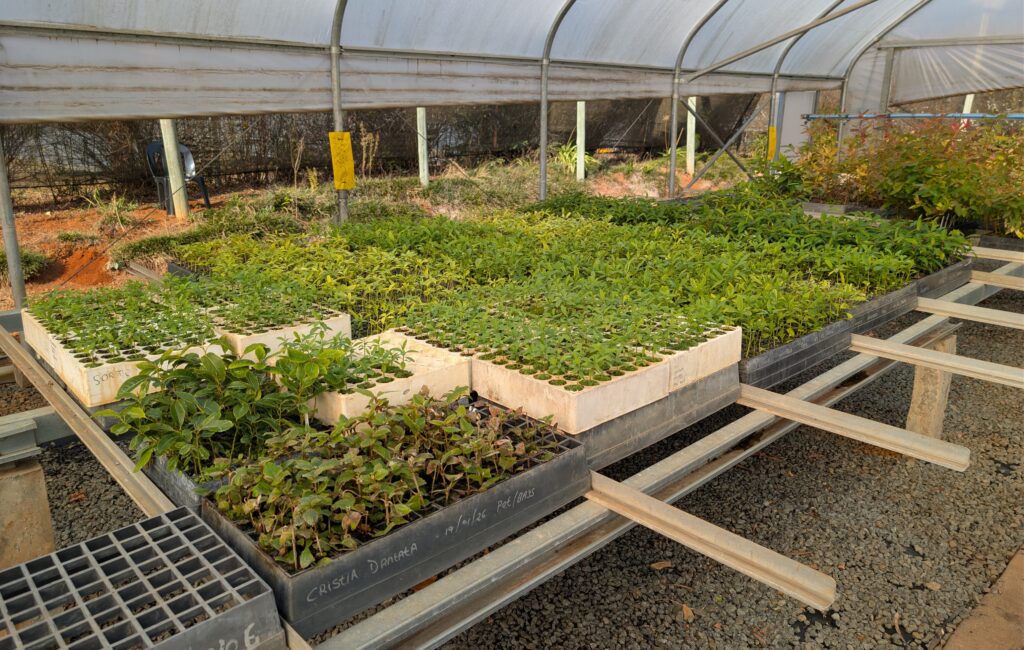
Using propagation techniques Sappi developed for commercial tree species, we multiplied those first 40 trees into young plants and distributed them through mandated government agencies. The aim was to increase supply rather than simply suppress demand.
Economic value
For me, the most interesting figure isn't the number of trees distributed. It is the economic value that emerges once they are established in communities.
In Hazyview in Mpumalanga, a participating community can earn about R1,000 per tree a year from sustainably harvested leaves and stalks. They have set a target of 2,500 medicinal trees to be planted in their community, representing potential income of R2.5 million a year.
Pepper-bark trees: The numbers
- Started with 40 trees
- More than 105,000 distributed across the Kruger National Park and its partners
- A further 73,000 distributed by Ezemvelo KZN Wildlife since 2019
- A survival rate of about 85% recorded by distribution agencies
- Hazyview target: 2,500 trees
- Potential income: about R1,000 per tree per year, or R2.5 million per year at target
The Sappi programme estimates considerably greater potential as the model expands across communities in KwaZulu-Natal, Mpumalanga, Limpopo and around the borders of the Kruger National Park.
The tree is no longer something an environmental organisation asks a community not to touch. It is a renewable resource that provides medicinal material and income.

Collaboration with healers
There is an important distinction here. We should not be asking traditional healers to save threatened trees on our behalf. If the plants their practices depend on disappear, they have as much to lose as anyone. The challenge is to give them a sustainable alternative before that happens.
Rather than relying on enforcement, the programme draws on social ecologists already working in communities and familiar with local needs. Traditional healers help identify plants of concern, and those who have changed their harvesting practices attend workshops with other plant users. The workshops cover propagation, seed collection, sustainable harvesting and water management.
This approach makes sense. When a medicinal plant becomes scarce, its price rises until communities struggle to afford the services that use it, and healers face a costly, unreliable supply. Overharvesting is not only a biodiversity problem. It is also a business, healthcare and community problem.
Social value
Perhaps this is where some of our environmental messaging falls short of its audience.
Those of us working in business and sustainability spend a great deal of time discussing biodiversity, natural capital, climate resilience and the bioeconomy. Much of the conversation takes place in boardrooms, at conferences, and increasingly on platforms such as LinkedIn.
It is easy to end up talking mainly to people who already agree with us. The conversation shifts when conservation is tied to something that matters in daily life.
- Protecting a medicinal plant makes sense if it safeguards a healer's supply.
- Sustainable harvesting makes sense if a tree can continue to generate income rather than being destroyed in a one-off harvest.
- Propagation makes sense if a community can grow a resource that would otherwise become increasingly expensive to buy.
None of this reduces biodiversity to a financial value. It recognises that value where it exists, alongside the realities of the people who live alongside these resources and depend on them.
Beyond pepper-bark
The approach has been extended to other species, including
- African cherry (Prunus africana)
- Black stinkwood (Ocotea bullata)
- Broad-leaved wild quince (Cryptocarya latifolia)
- Fever tree (Vachellia xanthophloea)
- Assegai (Curtisia dentata).
Forestry exists within landscapes shared with communities, indigenous vegetation, wildlife and other industries. It depends on functioning water systems, healthy soils and biodiversity, and as new demands are placed on land and water, these dependencies will matter more.