





The Chain of Custody communication gap in South Africa
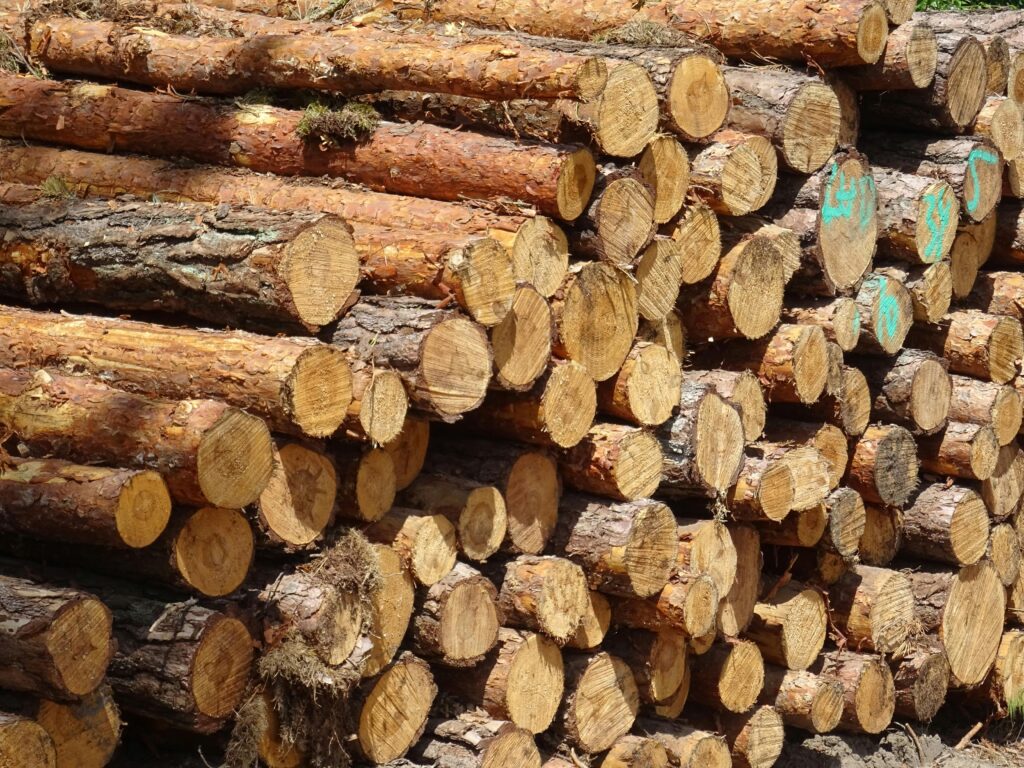
South Africa's commercial plantation forests are mostly FSC certified. That's not a small thing. It represents a significant and ongoing investment by forest managers in responsible practice, and it's reflected in the cost of the logs leaving those plantations. For foresters, that commitment is well understood. The problem is what happens to it further down the chain.
Value that needs to travel
For sawmillers, the issue is straightforward. Certified logs arrive at the mill carrying a status that has real commercial value for domestic green building projects, in export markets, and increasingly in retail supply chains where procurement teams are asking for documentation, not just assurances.
But without FSC Chain of Custody certification at the mill, that status doesn't survive processing. The material's certified origin is effectively lost the moment the log is broken down, and no FSC claim can be passed on to the customer.
Chain of Custody is the mechanism that keeps certified material's value intact through transformation from log to sawn timber, from sawn timber to engineered product, from component to finished piece. For sawmillers and mass timber producers already working with certified input material, the question worth asking is whether the premium embedded in that material is being recovered commercially or quietly disappearing at the point of processing.
Where the uptake is lagging
The honest answer is that awareness and uptake have been slow in parts of the industry that stand to benefit most. Architects, specifiers, developers, and furniture manufacturers are slowly coming to terms with what Chain of Custody means for them in practice.
Organisations like the South African Furniture Initiative (SAFI) and the Green Building Council of South Africa (GBCSA) are now actively working to close that gap, which is welcome. Still, it takes time to shift procurement habits and specification practices that have been in place for years.
Speaking at the Wood Conference in Cape Town in February, Richard Ferguson of FSC Southern Africa highlighted a practical point for those working in construction and development: FSC Project Certification offers a route that doesn't require a permanent Chain of Custody system. A developer or project team can certify a single build sourcing FSC-certified materials for that project and make a verifiable responsible sourcing claim against it, without the overhead of ongoing annual certification.
For architects and project managers already navigating green building rating tools, it integrates reasonably cleanly into processes they're already running. It's a lower barrier than many assume.
The cost question
For boutique furniture makers and small-to-medium manufacturers with export ambitions, the picture is more complicated, and it's worth being direct about it. FSC Chain of Custody certification involves annual audits, and for smaller operations, those costs are real. The audit fees, administrative burden, and time are not trivial; the cost-benefit calculation may not stack up unless local demand for sustainably grown and sourced products increases or export volumes justify it.
That tension is genuine, and SAFI, Forestry South Africa (FSA), Sawmilling South Africa (SSA), the Paper and Pulp Manufacturers (Pamsa) and the FSC are aware of it. The FSC is always ready to explore options, as its group certification schemes for small growers demonstrate.
For manufacturers who are already exporting or actively pursuing export markets, particularly into Europe, the requirements for verified responsible sourcing are tightening. The EU Deforestation Regulation (EUDR) is the clearest recent signal of that direction, and getting the basics right now is considerably easier than catching up with it later.
The public side
For readers of this magazine, none of the above is particularly new territory. But the industry faces a broader communication challenge that sits underneath all of it. There is a persistent disconnect between public demand for wood products, their perceptions of plantation forestry, and the prices they are prepared to pay.
That uneasiness is largely built on misunderstanding about plantation forestry, about carbon, about what sustainable forest management means for biodiversity. It is aggravated by the availability of wet-off saw timber and illegally “treated” poles and timber, mostly sourced from stolen trees. These factors have real consequences for how the sector is perceived and how confidently consumers and specifiers engage with timber as a material.
Foresters, sawmillers, mass timber producers, and woodworkers are well-placed to address this, but it requires a deliberate effort to engage with consumers. The case for certified timber needs to be made at the point of sale, in project documentation, and in one-on-one conversations with clients and specifiers.
Source: The original press release was supplied by Benjamin Rafemoyo, FSC Southern Africa Market Development Officer. Joy Crane revised and added to it, and errors are unintentional.


